
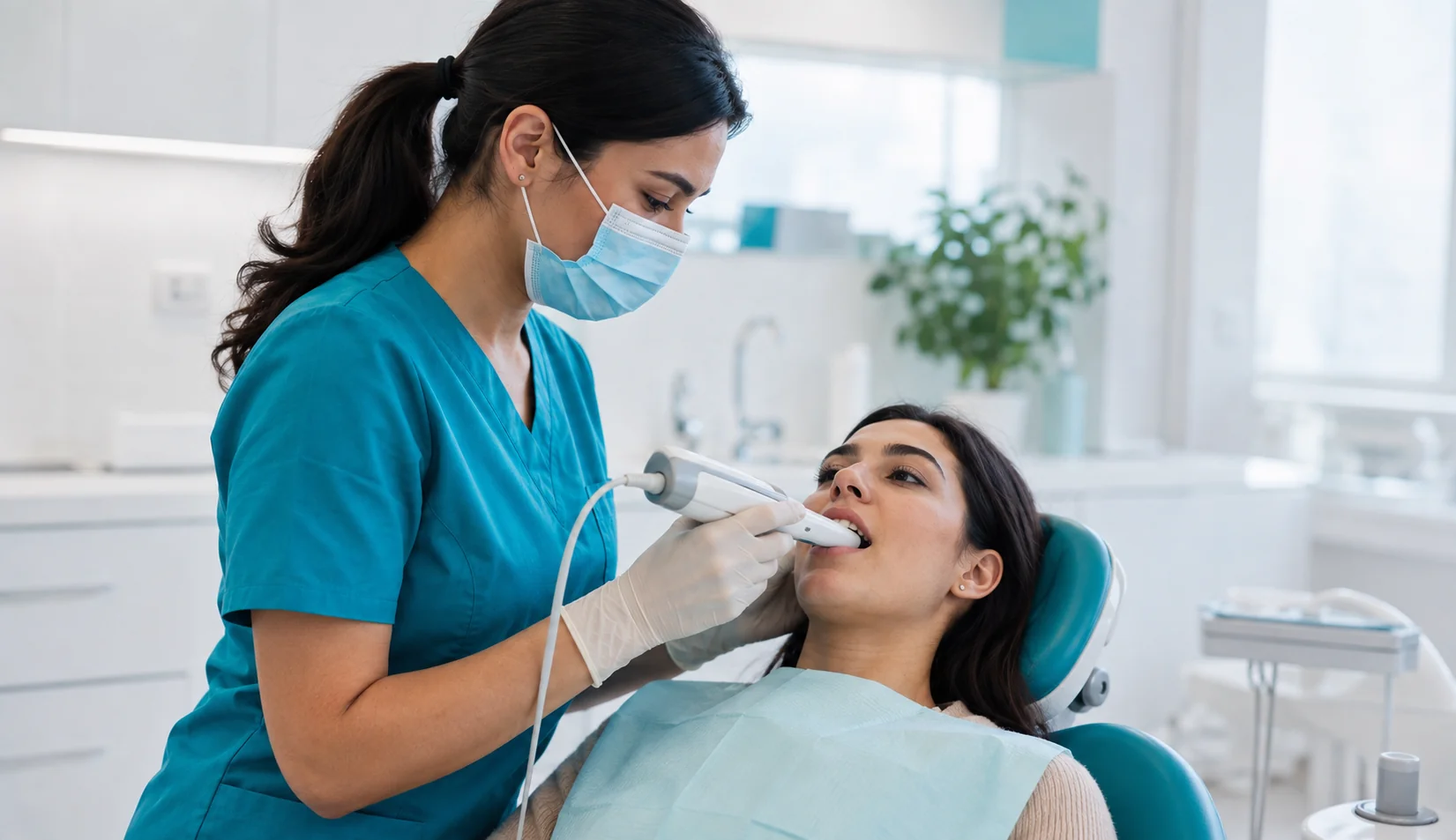
Digital dentistry at the Veda Stom clinic (Tashkent) is a modern standard of diagnostics, treatment, and prosthetics, completely eliminating the risk of medical error. The use of intraoral 3D scanners has replaced the discomfort of traditional impressions, while CAD/CAM technology allows for the manufacture of high-precision crowns and veneers with a perfectly microscopic fit. The digital protocol guarantees absolute patient comfort, high processing speed, and a predictable aesthetic outcome.
Dentistry in 2026 has finally bid farewell to the era of manual, eye-tracking techniques, cumbersome impression materials, and time-consuming try-in procedures. Analog methods have been replaced by digital dentistry—a field that combines computer modeling, 3D scanning, and robotic restoration production.
As the chief physician of the clinic Veda Stom, I am proud to note that our patients in Tashkent Today, patients receive dental care that meets the highest international standards. Digital dentistry has revolutionized the concept of treatment comfort: processes that previously required weeks of waiting and numerous visits are now completed quickly, with meticulous precision and predictable results.
Analogue vs. Digital: What's the Fundamental Difference?
The main advantage of the digital approach is the elimination of the accumulation of errors. With the traditional method, the dentist takes an impression using silicone material, which can shrink, then the dental technician manually casts a plaster model and grinds the crown. Each of these steps carries the risk of micro-distortions. As a result, the crown may not fit perfectly, allowing bacteria to accumulate at the gum line.
In the digital protocol, all physical intermediate steps are replaced by virtual data. A 3D scanner instantly captures millions of surface points, transmitting the information to a computer, where a program calculates the ideal anatomical shape of your future crown or veneer.
Comparison of traditional analog dentistry and digital protocol:
| Comparison parameter | Traditional (analog) dentistry | Digital Dentistry at Veda Stom |
| Taking impressions | Using spoons with cold plastic masses may cause gag reflex. | Fast and comfortable 3D scanning of the oral cavity with a thin nozzle. |
| Precision of fit | Error up to 100–150 microns due to shrinkage of plaster and impression material. | Precision CAD/CAM milling (error up to 10–15 microns). |
| Process speed | The production of the structure takes from 7 to 14 days through manual laboratory labor. | Manufacturing of crowns or onlays is possible in 1–3 days (or on the day of application). |
| Predictability | The patient sees the finished result only at the moment of final installation in the chair. | Virtual modeling allows you to see your new smile before treatment begins. |
Veda Stom's key digital technologies serve patients
The transition to digital has affected all key areas of our clinic's work. Tashkent — from hygiene to complex implantation and aesthetic reconstruction of the smile.
Key digital tools of our clinic:
- Intraoral 3D Scanner: A portable optical sensor that takes thousands of images per second at high speed, creating an accurate, three-dimensional, color model of your jaws on a monitor screen.
- CAD/CAM (Computer-Aided Design / Computer-Aided Manufacturing) technology: A software package where a doctor or technician virtually models the shape of a tooth using a CAD module, and a CAM module transmits a command to a robotic milling machine.
- Digital Smile Design: Project planning allows for matching the parameters of future teeth with the patient's facial proportions, eye shape, and facial expressions.
- Surgical templates: Computerized placement of implants with the creation of special guide caps that eliminate any deviation of the titanium pin by even a fraction of a millimeter.
Advantages of digital impressions over classical masses
For many patients, taking traditional impressions has always been one of the most unpleasant procedures in the dentist's office—the tray of paste pressing against the roof of the mouth, causing a gag reflex and a feeling of suffocation. Intraoral scanning has completely solved this problem.
Why patients prefer digital impressions:
- Absolute comfort: The scanning module is compact. The procedure is similar to brushing your teeth with an electric toothbrush and causes no discomfort.
- Instant quality check: The doctor sees the 3D model on the screen in real time. If a specific area requires clarification, it can be scanned in just a few seconds without having to redo the entire procedure.
- Impeccable hygiene and eco-friendliness: The absence of physical materials eliminates contact of the mucous membrane with chemical compounds and simplifies data transfer to the digital laboratory via secure communication channels.
Digital dentistry in the clinic Veda Stom — is the perfect combination of medical excellence and high technology. We offer city residents Tashkent Comfortable, safe, and long-lasting treatment without stress or uncertainty. Trust your smile to the technologies of the future today!