
Why Is It Important to Replace a Missing Tooth?
Tooth loss is not just an aesthetic issue. Shifting of adjacent teeth, bite misalignment, bone tissue atrophy, and even digestive problems are among the consequences of delaying prosthetics. Modern dentistry offers two popular solutions: dental implants and bridges. How do you choose the best option in 2025? Let's break it down.
What Are Bridges?
A bridge is a fixed structure anchored to the adjacent teeth to replace a missing one. Modern bridges are made from metal-ceramic, zirconium dioxide, or ceramic composites, providing strength and a natural appearance.
Advantages of bridges:
- Fast placement (1-2 weeks).
- Lower cost compared to implants.
- Suitable when implantation is contraindicated (e.g., osteoporosis).
Flaws:
- Requires grinding down healthy adjacent teeth.
- Lifespan — 7-12 years.
- Load on the abutment teeth can lead to their damage.
What Are Dental Implants?
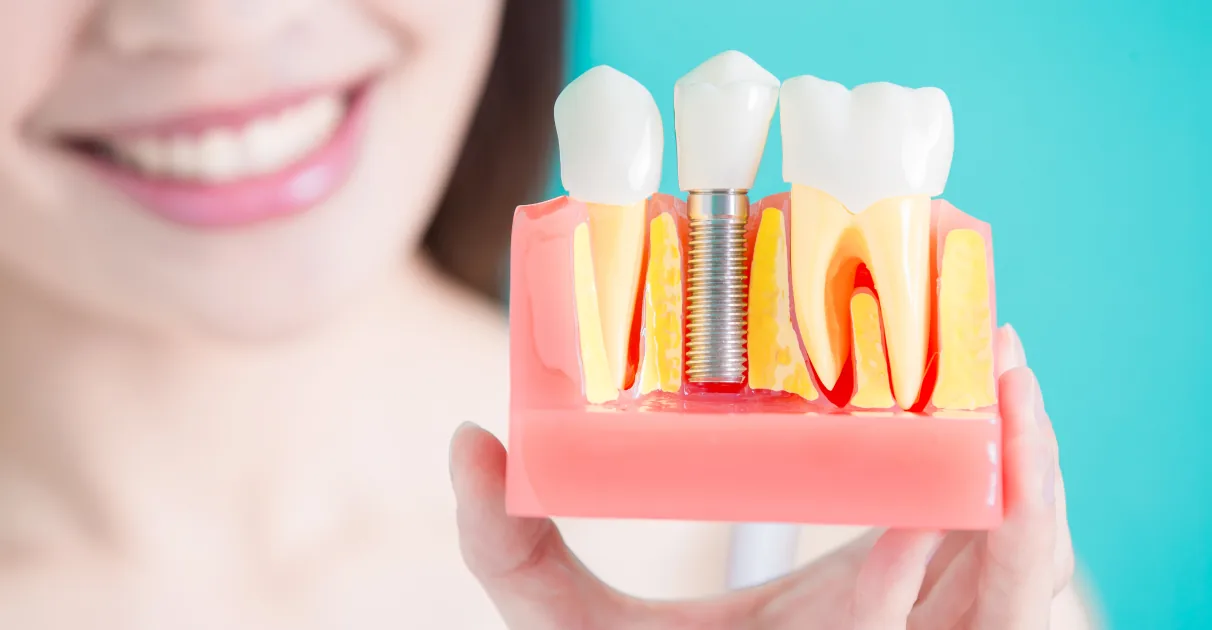
An implant is a titanium post placed into the bone to replace the tooth root, followed by a crown placement. In 2025, single-stage protocols (such as All-on-4) and metal-free zirconium implants for allergy-prone patients are popular.
Advantages of implants:
- Fully restore chewing function.
- Do not affect adjacent teeth.
- Lifespan — 20+ years with proper care.
Flaws:
- High price.
- A lengthy process (3-6 months for classic implantation).
- Contraindications: severe blood disorders, uncontrolled diabetes.
Comparing Implants and Bridges: What's Relevant in 2025?
Let's look at the key parameters:
1. Lifespan
- Bridges: 7-15 years.
- Implants: 20-30 years (titanium is corrosion-resistant).
2. Care
- Bridges: Require thorough hygiene under the structure.
- Implants: Cared for like natural teeth.
3. Safety
- Modern nano-coated implants reduce the rejection risk to 1-2%.
- Bridges can cause decay in the abutment teeth.
How to Choose: Recommendations from Veda Stom Dentists
- Bone tissue condition: In case of atrophy, a bridge or basal implantation is suitable.
- Budget: If your budget is limited — a bridge, but factor in future replacement costs.
- Time: For a fast result, choose a bridge or single-stage implants.
- Aesthetics: Zirconium crowns on implants perfectly mimic natural teeth.
Important! Before choosing, undergo a 3D diagnostic scan: it reveals hidden pathologies (cysts, inflammation) and helps determine the right method.
Expert Opinion from Veda Stom in Tashkent
According to 2025 research, 70% of clinic patients prefer implants for their durability and physiological compatibility. However, bridges remain relevant for cases where implantation isn't possible.
Recommendations:
- For 1-2 missing teeth — implants.
- For multiple defects and a limited budget — a bridge.
Veda Stom specialists use digital planning and biocompatible materials to minimize risks and guarantee results. Book a consultation to get a personalized treatment plan!
FAQ
Q: Is getting implants painful?
A: No, the procedure is performed under sedation or local anesthesia.
Q: Can you get an MRI with implants?
A: Yes, titanium and zirconium do not interact with magnetic fields.Q: Which method is better for molars?
A: Implants — they withstand high loads and protect the bone from atrophy.