
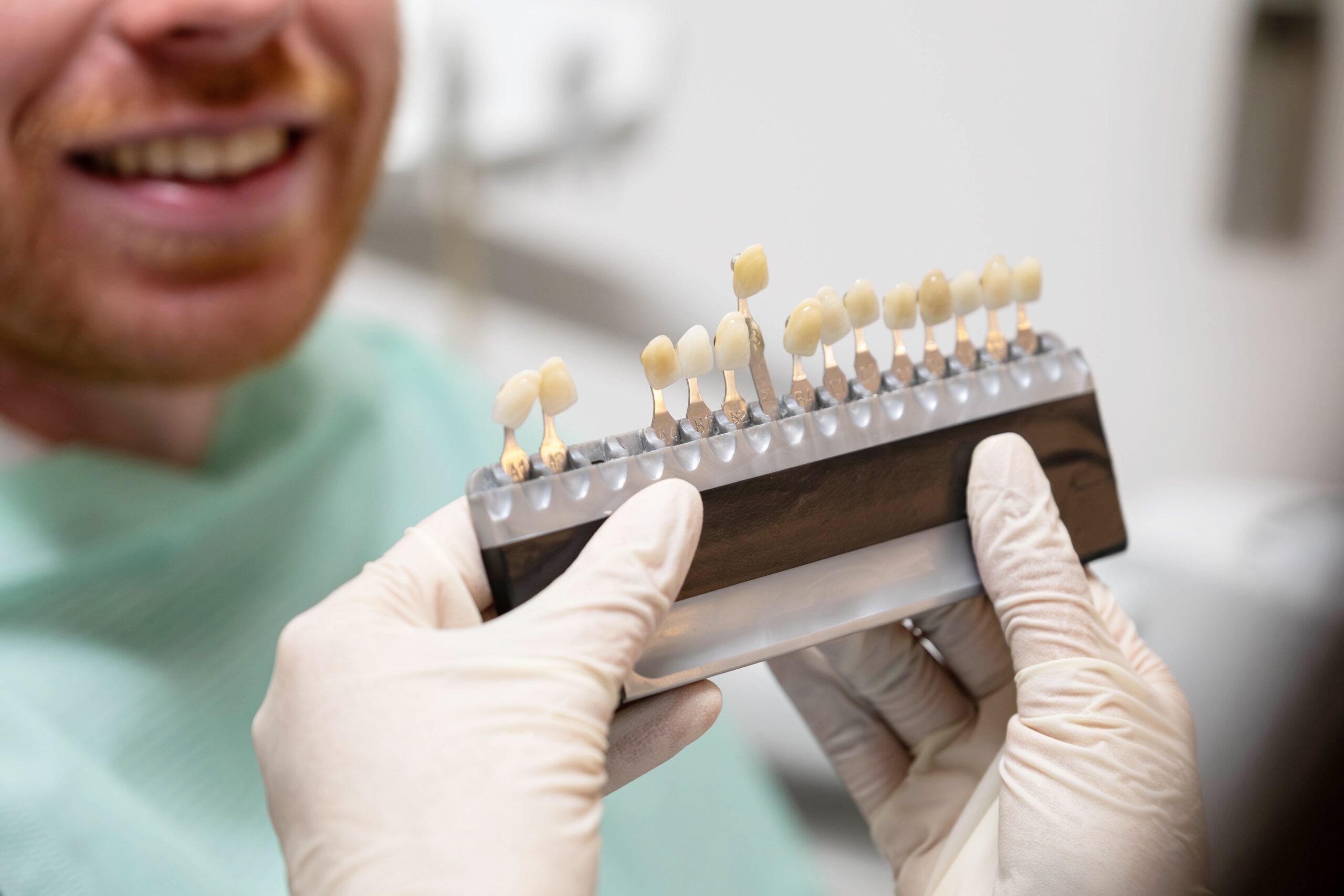
Dental bridges at the Veda Stom clinic (Tashkent) remain a reliable, classic method for restoring the integrity of a row of teeth after the loss of one or two adjacent teeth. This design allows for the rapid restoration of full chewing function and aesthetics. Thanks to the use of zirconium dioxide and CAD/CAM digital modeling, modern bridges provide high strength and a secure fit, offering a proven alternative to implantation.
The loss of even one tooth triggers a chain of negative changes throughout the entire dental system. Neighboring teeth, deprived of support, eventually begin to tilt toward the defect, while opposing teeth on the opposite jaw begin to move toward the gap. In modern dentistry in 2026, there are two main ways to solve this problem: dental implants and the installation of dental bridges.
As an orthopedist at the clinic Veda StomI often communicate with patients in TashkentThose who choose orthopedic bridges due to medical contraindications, anatomical features, or time constraints. A bridge crown is a time-tested, reliable design that can quickly restore the joy of a full life and confidence in your smile.
What is a dental bridge?
A dental bridge is a fixed orthopedic structure consisting of several interconnected crowns. The outer crowns are hollow and fit over pre-prepared abutment teeth (the patient's own teeth, which border the defect on both sides). The middle portion of the bridge is solid (artificial) and replaces the missing tooth, literally "hanging" above the gum as an intermediate portion.
For the structure to last a long time, the supporting teeth must be stable and have healthy periodontal tissue, as they will now have to withstand double the chewing load—for themselves and for the missing element.
Comparative analysis of a bridge prosthesis and a single implant:
| Comparison parameter | Bridge prosthesis (Dental bridge) | Single implant |
| Treatment timeframes | Short (7 to 14 days on average) | Long-term (2 to 6 months for engraftment) |
| Impact on adjacent teeth | Grinding and often depulpation of supporting teeth is required | The adjacent teeth remain completely untouched. |
| Load on bone | The bone tissue in the area of the missing tooth is not loaded and atrophies. | The implant transfers the load to the bone, preventing its loss |
| Service life of structures | From 8 to 15 years (depending on the material) | Over 20 years / Lifetime warranty on pin |
| Surgical intervention | Completely absent | Surgery is required (pin installation) |
Types of bridge crowns by materials
In our clinic in Tashkent We select the material for the structure based on the clinical picture, the location of the defect, and the patient's aesthetic expectations.
Basic materials for bridge construction:
- Metal-ceramic bridges: A durable and affordable option. It features a cast metal frame lined with porcelain. It's suitable for the chewing area, but lacks the aesthetic appeal of metal-free alternatives in the frontal area.
- Zirconium bridges: The most advanced and best choice available today. Zirconium dioxide has extreme flexural strength (up to 1200 MPa), allowing for the creation of long bridges. It is completely biocompatible and looks like natural teeth.
Indications and contraindications for the installation of a "bridge"
Despite the versatility of the method, bridge structures have their own clear medical application boundaries, which we strictly adhere to in Veda Stom.
Key indications:
- Absence of 1 to 2 teeth in a row in the anterior or lateral region.
- The presence of reliable, strong teeth at the edges of the defect, capable of bearing the load.
- Inability to perform the surgical stage of implantation due to health reasons (for example, in severe forms of blood clotting disorders).
- The patient's desire to restore the integrity of the row in the shortest possible time.
Main contraindications:
- Absence of more than 3 teeth in a row (the length of the span will be too large, which will lead to overload and loss of supporting units).
- Severe periodontitis and pronounced tooth mobility.
- Pathological abrasion of teeth or severe forms of bruxism (require preliminary treatment by a gnathologist).
How dental prosthetics are performed at the Veda Stom clinic
A high-quality bridge requires precise fit. Our clinic automates the process using CAD/CAM technology.
Stages of creating a bridge prosthesis:
- Diagnostics and preparation: The dentist performs oral hygiene. Abutment teeth are treated if necessary, root canals are filled, and gentle preparation (grinding) for crowns is performed.
- Digital impression: Using an intraoral scanner, we create a virtual 3D model of the jaws without the use of uncomfortable plastic masses.
- Temporary bridge: While the permanent structure is being manufactured, the patient is fitted with a temporary bridge made of PMMA plastic, which protects the teeth and maintains aesthetics.
- Milling and fixation: A robotic machine mills a permanent bridge from a solid block of zirconium dioxide or metal. At the final appointment, the orthodontist checks the bite and cements the structure with special dental cement.
Bridge crowns in Veda Stom — is a predictable, reliable, and aesthetic way to restore balance to the dental system. If you are looking for a proven solution in TashkentOur specialists will select the optimal construction material for you, which will restore your comfort while eating and confidence in every movement of your smile.