
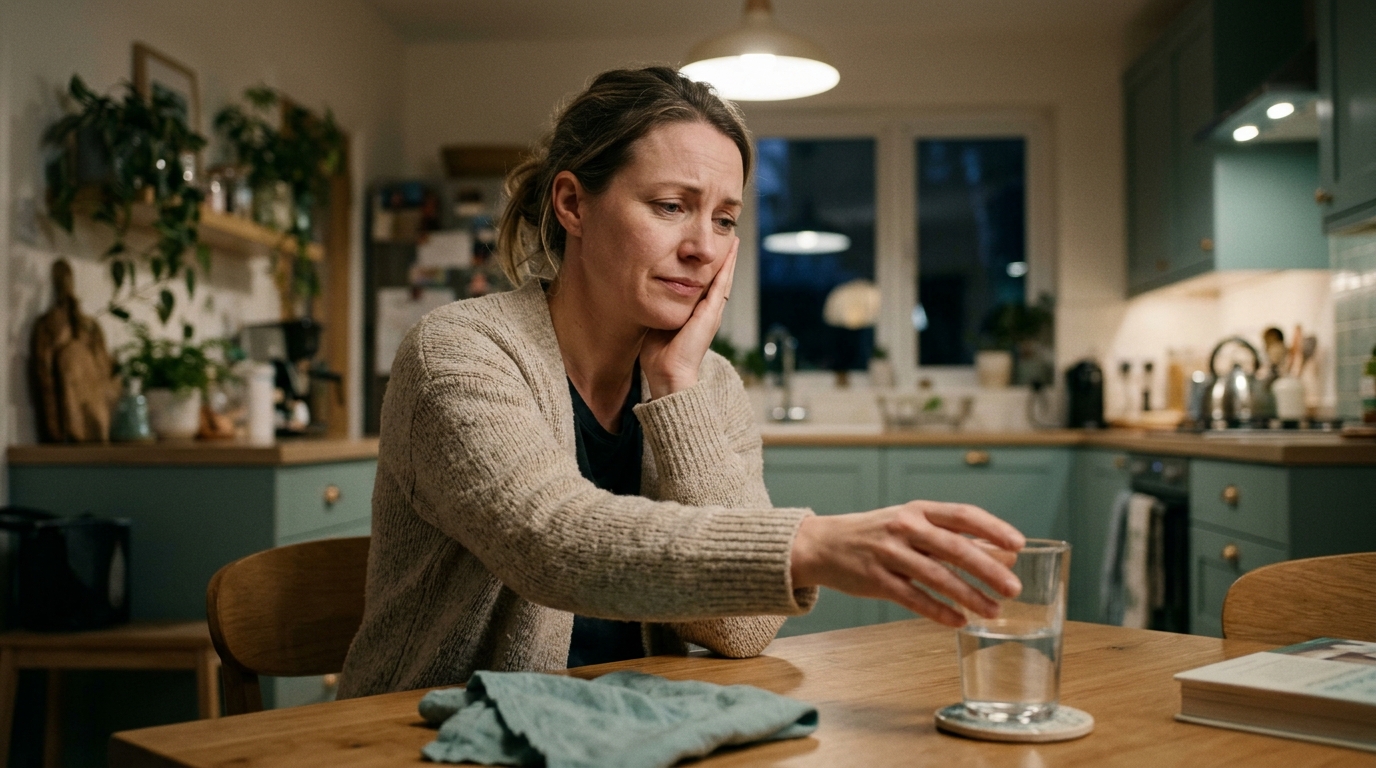
Toothache often strikes in the evening or at night, when you cannot see a doctor straight away. At that point it is important to ease the discomfort without doing any harm.
Home measures only relieve pain temporarily. They do not treat the cause, so you still need to see a dentist.
In brief: what you need to know
- What helps: Rinsing with warm water, gently cleaning between the teeth, a cold compress on the outside of the cheek, a painkiller taken as directed.
- What to avoid: Warming the sore area, placing a tablet on the gum and putting off a visit to the dentist.
- The key point: Pain is a warning sign. Only a dentist can find and treat the cause.
What you can do at home to ease the pain
The aim of home measures is to gently take the strain off the painful tooth, not to cure it.
- rinse your mouth with warm water or a salt solution to remove food debris;
- gently clear the gap between your teeth with dental floss;
- apply something cold to the outside of your cheek through a cloth for 10-15 minutes;
- take a painkiller strictly according to the package leaflet;
- when lying down, keep your head slightly raised, as the throbbing is usually less.
If the pain does not go away or comes back, book an appointment rather than waiting for it to flare up.
What not to do with toothache
Some familiar “folk” remedies make inflammation worse.
- do not warm the sore area or apply warm compresses: heat increases swelling;
- do not put a tablet or part of one directly on the tooth or gum, as this can burn the soft tissue;
- do not put off your visit even if the pain has eased: the cause usually remains;
- do not choose antibiotics yourself; only a doctor can prescribe them.
What toothache may mean
The type of pain helps you judge how urgently you need a check-up, but it does not replace a diagnosis.
| Type of pain | What it may mean | What to do |
| Brief reaction to cold or sweet things | Enamel sensitivity or early decay | Book a routine check-up |
| Prolonged dull, aching pain | Deep decay or inflammation | See a dentist within the next few days |
| Sharp, throbbing pain | Likely inflammation of the nerve (pulpitis) | Book an appointment as soon as possible |
| Pain with swelling or fever | Possible infection with pus | See a doctor urgently |
When to see a dentist urgently
Some symptoms are a sign that you should not wait until morning or the weekend.
- increasing swelling of the cheek, gum or under the jaw;
- a raised temperature alongside toothache;
- pain that keeps getting worse and is not relieved by the usual measures;
- difficulty swallowing or opening your mouth;
- severe pain after a dental injury.
In such cases it is important to see a doctor quickly. Routine care for decay is provided as part of caries treatment, and for nerve inflammation as part of pulpitis treatment.
Important
This article is for information only and does not replace a consultation with a doctor. Diagnosis and treatment are determined by a dentist after an examination. Take painkillers strictly according to the package leaflet and agree the dosage with a doctor or pharmacist.
Severe or increasing swelling, a high temperature, difficulty swallowing or pain after an injury are all reasons to seek help without delay.
What to do next
Toothache right now: call the clinic so we can see you without unnecessary waiting.
Want to book a check-up: leave a request on the clinic's contact page.
Want to know the cost: take a look at the clinic's price list.
Need urgent help: call us on +998 (97) 717 04 00.
Frequently asked questions
Can I apply heat to a painful tooth?
No. Heat increases blood flow and swelling, which usually makes the pain worse. It is better to apply something cold to the outside of the cheek through a cloth for 10-15 minutes.
Which painkiller should I take?
Use a product that suits you, strictly according to the package leaflet. Agree the choice and dosage with a doctor or pharmacist. Do not place the tablet on the gum or tooth.
Will toothache go away on its own?
The pain may ease for a while, but the cause usually remains and the pain comes back. So even if you feel better, it is worth seeing a dentist.